.png)
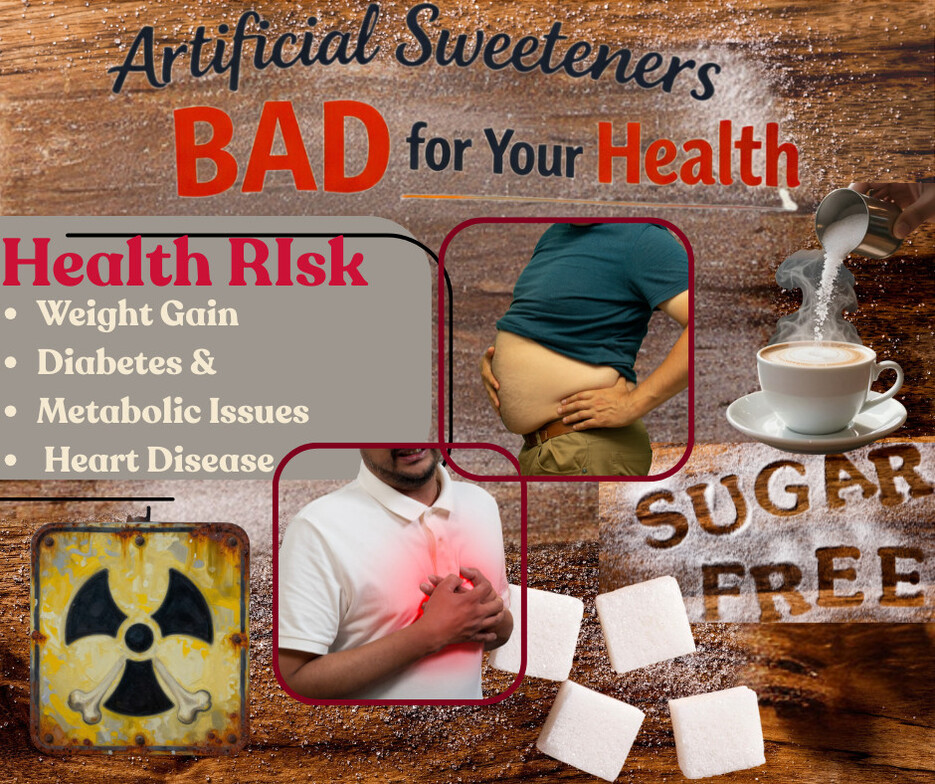
How Sucralose and Artificial Sugars Can Make Us Gain Weight
Dr. John Giusti, D.C.
Artificial sweeteners are often marketed as the “healthy swap.”
No calories. No sugar. No guilt.
But your body doesn’t read nutrition labels — it responds to signals. And when it comes to sucralose and other artificial sweeteners, those signals can get seriously mixed.
What’s meant to help us lose weight can quietly push the body in the opposite direction.
Sweet Taste, Confused Metabolism
When you taste something sweet, your brain expects sugar — and energy — to follow. That expectation triggers insulin release and digestive responses designed to handle calories.
With artificial sweeteners, the sweetness arrives… but the calories don’t.
Over time, this mismatch confuses your metabolism. Your body prepares to store energy that never shows up, which can lead to:
-
Increased fat storage
-
Blood sugar instability
-
Stronger cravings for real sugar later
Instead of helping regulate appetite, artificial sweeteners often make it louder.
Insulin Still Responds — Even Without Sugar
Sucralose may be calorie-free, but it still stimulates insulin in many people. Insulin is a fat-storage hormone, and frequent spikes make it harder for the body to burn fat efficiently.
The result?
-
Easier weight gain
-
Harder fat loss
-
Energy crashes that drive more snacking
Your body is doing exactly what it was designed to do — it’s just reacting to a confusing signal.
Artificial Sweeteners Disrupt the Gut
Your gut bacteria play a massive role in weight regulation, inflammation, and hunger hormones.
Artificial sweeteners can disrupt the balance of healthy gut microbes, which affects:
-
How efficiently you process food
-
How full you feel after eating
-
How much energy gets stored vs. burned
An unhealthy gut environment makes weight loss feel like an uphill battle, no matter how “clean” your calories look on paper.
They Train Your Brain to Want More Sweetness
Artificial sweeteners are often hundreds of times sweeter than sugar. Over time, this raises your sweetness tolerance.
That means:
-
Fruit tastes less satisfying
-
Naturally sweet foods don’t “hit the spot”
-
Cravings for sweets become more intense and frequent
Instead of retraining your palate, artificial sweeteners keep you stuck in the sugar cycle — just wearing a different disguise.
Stress, Weight Gain, and the Nervous System
There’s another layer that doesn’t get talked about enough: stress.
Artificial sweeteners can increase stress responses in the body by disrupting blood sugar and gut health. That stress keeps the nervous system in a semi fight-or-flight state.
When your nervous system is stressed:
-
Fat loss slows
-
Inflammation increases
-
The body prioritizes storage over repair
Weight gain isn’t a willpower issue — it’s often a stress response.
Why “Zero Calories” Isn’t the Same as “Zero Impact”
Your body doesn’t care if something has calories. It cares about how it affects hormones, digestion, and the nervous system.
Sucralose and artificial sugars may not add calories, but they can:
-
Increase hunger
-
Slow metabolism
-
Disrupt gut health
-
Promote fat storage
That’s not weight-loss friendly — it’s weight-loss confusing.
A More Supportive Approach
Instead of tricking your body, support it.
Try:
-
Reducing sweetness overall (not replacing it)
-
Choosing naturally sweet foods like fruit
-
Reading labels for hidden sweeteners
-
Paying attention to how your body actually feels after consuming them
When your body trusts what you’re giving it, it works with you — not against you.
Your Body Is Always Keeping Score
If weight loss feels harder than it should, it’s not because you’re failing. It’s often because your body is responding to mixed signals.
Artificial sweeteners promise control, but real balance comes from clarity — clear signals, stable blood sugar, and a calm nervous system.
When you stop confusing your body, it remembers how to do what it’s always been designed to do.
Dr. John Giusti, D.C.

.jpg)