.png)
Dr. John Giusti, D.C.
The Heart–Spine Connection: How Stress Affects Your Body
We often think of stress as something that lives in the mind. A busy schedule. Emotional pressure. Mental overload.
But your body tells a deeper story—especially your heart and spine.
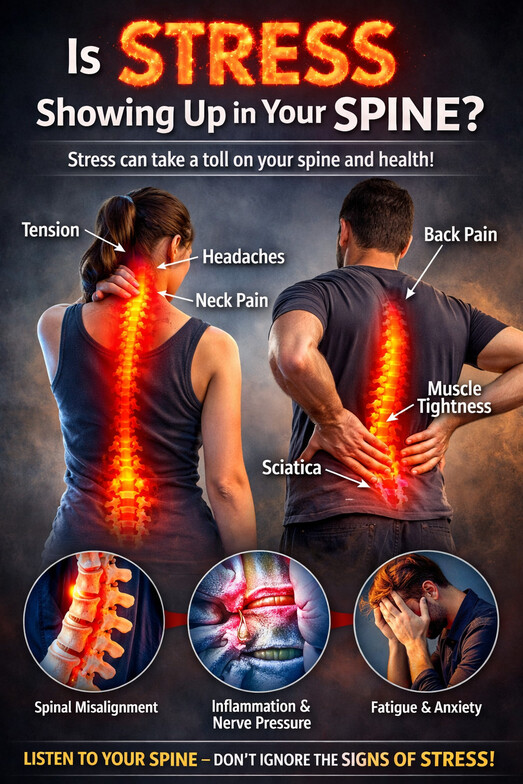
Stress doesn’t just stay “up in your head.” It shows up in your posture, your breathing, your muscle tension, and the way your nervous system communicates from head to toe.
Let’s talk about how the heart and spine are deeply connected—and why stress can disrupt both.
Your Spine: The Highway of the Nervous System
Your spine isn’t just a stack of bones—it’s the main communication pathway between your brain and the rest of your body.
Running through it is the spinal cord, which controls:
-
Heart rate and blood pressure
-
Muscle tension and relaxation
-
Breathing patterns
-
Stress and recovery responses
When your spine is under tension—especially in the neck and upper back—it can interfere with how efficiently these signals travel.
That’s where stress sneaks in.
Stress, the Heart, and the “Fight or Flight” Loop
When stress is present, your body shifts into fight-or-flight mode:
-
Heart rate increases
-
Breathing becomes shallow
-
Muscles tighten (especially the neck, shoulders, and mid-back)
-
Posture collapses forward
This creates a feedback loop:
-
Stress tightens the spine
-
A tense spine keeps the nervous system on high alert
-
The heart works harder than it needs to
Over time, this can contribute to:
-
Upper back and chest tension
-
Headaches and neck pain
-
Fatigue and poor sleep
-
Feeling “wired but tired”
Posture Tells the Story of Stress
Have you ever noticed how stress changes your posture?
-
Shoulders roll forward
-
Head drifts in front of the body
-
Chest collapses inward
This posture compresses the upper spine and rib cage, limiting breath and reducing oxygen flow. Less oxygen means your heart and nervous system have to work harder—fueling more stress.
Your body isn’t failing you.
It’s adapting to pressure.
Listening to the Heart–Spine Conversation
The good news? Small changes can make a big difference.
Try these gentle awareness resets:
-
Pause & breathe: Inhale deeply into your rib cage, not just your chest.
-
Unclench your shoulders: Stress loves to hide there.
-
Stack your posture: Ears over shoulders, shoulders over hips.
-
Move often: Micro-movements throughout the day help reset the nervous system.
When the spine moves better, the nervous system calms.
When the nervous system calms, the heart doesn’t have to work so hard.
Stress Is a Signal—Not a Weakness
Stress showing up in your body is not a failure. It’s feedback.
Your heart and spine are constantly communicating, adapting, and protecting you. The key is learning to listen—and respond with care.
Supporting spinal health isn’t just about pain relief.
It’s about giving your body the space it needs to breathe, regulate, and heal.
Because when your spine is supported, your heart can soften—and your whole body benefits.
Dr. John Giusti, D.C.

.jpg)